You've seen it a hundred times. The ball hits the pad. The bowler turns and screams "HOWZAT!" The umpire stands there, thinks for what feels like an eternity, and either raises the finger or shakes their head. Half the stadium erupts. The other half is confused. This is LBW (Leg Before Wicket), cricket's most argued-about dismissal, and also one of its most important.
Here's exactly how it works.
The Core Idea
LBW exists because without it, batters could just stick their pad in front of the stumps every time a ball was going to hit them. No risk, unlimited protection. The game would be unplayable.
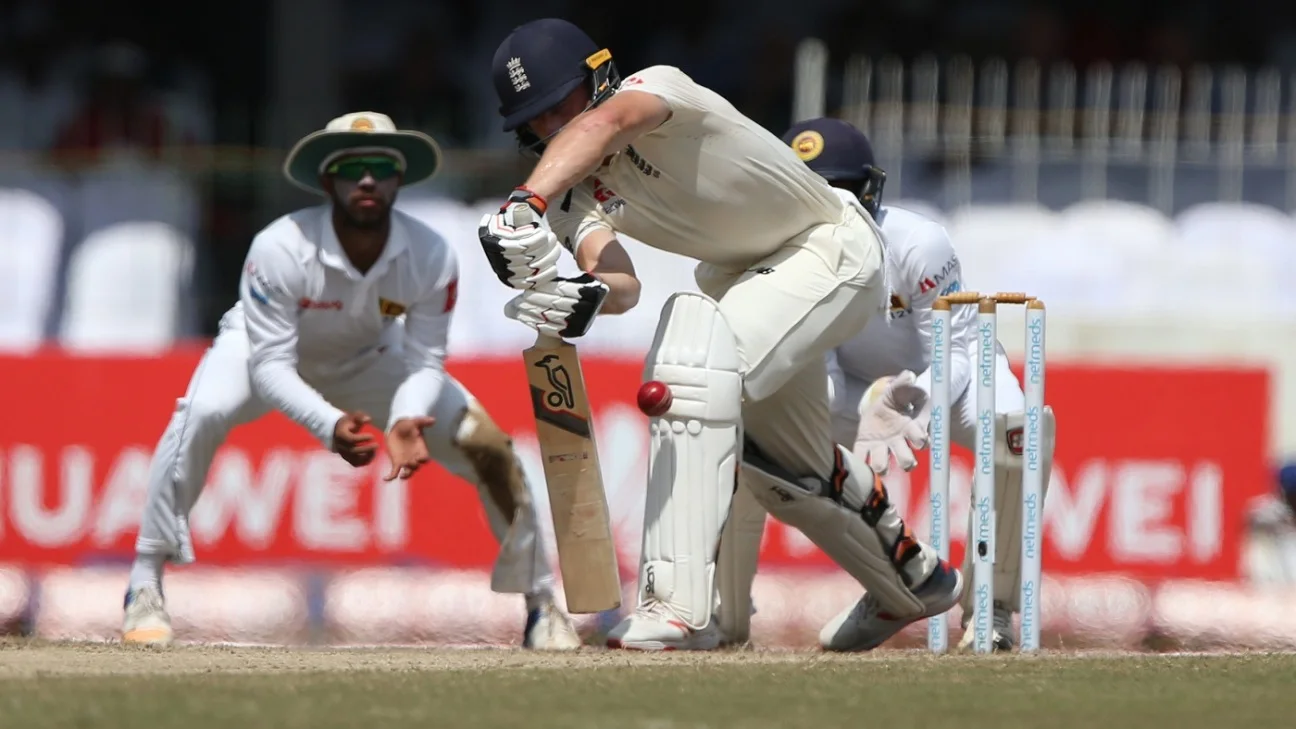
So the law says: if the ball hits any part of the batter's body, usually the pad, before hitting the bat, and it was going on to hit the stumps, the batter can be given out. The body isn't allowed to substitute for the bat as a defence.
Simple in principle. Complicated in practice.
What the Umpire Actually Checks: 5 Conditions
For an LBW decision to be out, all of the following must be true:
1. The ball must not have hit the bat first
If there's any contact with the bat before the pad, it's not LBW. Even a thin inside edge onto the pad gives the batter full protection. This is why you'll see fielders appealing even when a ball clearly hit the bat: bowlers occasionally miss edges.
2. The ball must not have pitched outside leg stump
If the ball bounced on the leg side of leg stump, the batter cannot be given LBW, even if it was going to hit the stumps. This protects batters from around-the-wicket traps where the ball pitches on a line they can't play.
3. The impact must be in line with the stumps
Where the ball hit the pad matters. If impact is outside the off stump, the batter can be out, but only if they're not playing a shot. If they were attempting a stroke, impact must be between off and leg stump.
4. The ball must be going on to hit the stumps
This is the big one. Even if everything else checks out, if the ball was going over the stumps, down leg, or past off, it's not out. The umpire has to project the ball's trajectory in their head after impact, which is why DRS was such a game changer.
5. The batter must not be attempting a shot in some scenarios
If the ball pitches outside off stump and impact is also outside off, the batter is only out if they weren't playing a shot. If they played and missed, they get the benefit of the doubt on the line.
The "Umpire's Call" Problem
Before DRS, all of this was in the umpire's head. They had one second to process five conditions while watching a ball travel at 140 km/h, curve through the air, and hit a moving target. The margin for error was enormous.
DRS changed everything. Now ball-tracking software can plot the exact pitch location, impact point, and projected trajectory of every delivery. A review can overturn an umpire's decision, but only if the ball is clearly missing the stumps, not just clipping them.
This is where Umpire's Call comes in, the most controversial part of DRS. If the ball is predicted to hit the stumps but only just, it stays as Umpire's Call. If the on-field umpire said not out, it stays not out. If they said out, it stays out. The review is not enough to overturn it.
This drives players and fans absolutely mad, and it's technically the right call, because ball-tracking has a margin of error too.
The Most Common LBW Scenarios
The classic front-pad block: Batter plays forward, ball straightens off the seam, hits the front pad in line. Classic LBW shout. Umpire checks: did it pitch in line? Is impact in line? Is it hitting the stumps? If all three, yes: out.
The sweep that misses: Batter plays a sweep shot and misses. Ball hits the pad. Because the batter was playing a shot, the ball must have pitched in line and impact must be in line. If it pitched outside leg, not out regardless.
The pad-first block outside off: Batter deliberately uses the pad outside off stump. Not playing a shot. If the ball pitched in line and was going to hit the stumps, out.
The edge-then-pad: Ball clips the inside edge then hits the pad. Not out. The bat was hit first.
Why Is LBW So Debated?
Because even with DRS, there's judgment involved. Was the batter playing a shot or not? Did the ball just nick the bat? Did the ball pitch exactly on leg stump or just outside? These calls are subjective, and in cricket, where one LBW decision can change a Test match, the stakes couldn't be higher.
The best bowlers in the world build entire strategies around the LBW law. In-swing bowlers go around the wicket to angle the ball into the stumps. Spinners pitch outside off to batters who won't play shots. Fast bowlers target the front pad early in an innings when batters are not yet fully forward.
Understanding LBW doesn't just help you follow the game. It helps you understand what bowlers are actually trying to do, and why a single ball can be the most tactically loaded moment in cricket.
Dive deeper into cricket's rulebook at The Rulebook, every law explained without the jargon.