
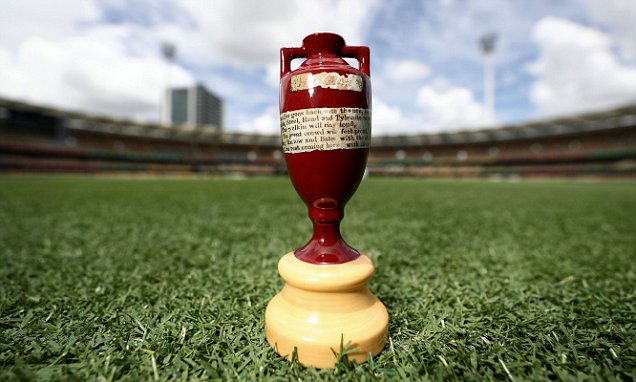
Most sporting rivalries are defined by who wins. The Ashes is defined by what winning costs. Five Tests, played across weeks of shifting momentum, where one session can define a series and a single innings can outlive a career. England versus Australia. The urn that fits in a human hand. The contest that refuses to become ordinary no matter how many times it is repeated.
To understand why the Ashes endures, you have to understand where it came from.
How It All Started in 1882
On 29 August 1882, Australia defeated England at The Oval by 7 runs in what was only the second Test match played on English soil. It was a low-scoring, tense game decided by Fred Spofforth's 7 wickets for 44 in England's second innings. England, chasing 85, were bowled out for 77.
The following day, The Sporting Times published a mock obituary: "In Affectionate Remembrance of English Cricket, which died at The Oval on 29th August, 1882... The body will be cremated and the ashes taken to Australia."
It was intended as a joke. It became a tradition. When England toured Australia that winter and won the series, the captain was presented with a small urn, allegedly containing the ashes of a bail, or a ball, or a veil, depending on which account you believe. The trophy, barely 10 centimetres tall, has been contested ever since. It is the smallest and most famous trophy in world sport.
Bodyline: The Series That Strained Two Nations
In the 1932-33 series, England captain Douglas Jardine devised a tactic specifically designed to neutralise Don Bradman, who had averaged 112.29 in the previous series and was considered virtually unplayable through conventional means.
The tactic, known as Bodyline or leg theory, instructed Harold Larwood and other fast bowlers to deliver short-pitched balls aimed at the body with a packed leg-side field. Batters either took the blow, fended to a fielder, or took significant risk trying to avoid the ball entirely.
Bradman's average dropped to 56.57, still extraordinary by any normal standard, but far below what he was capable of. The series descended into diplomatic crisis. The Australian Cricket Board sent official cables to the MCC in London. Relations between the two countries were strained well beyond the boundary. Bodyline remains the defining example of cricket as a pressure point between national identities, not merely a sport.
Botham's Ashes: The Summer of 1981
If Bodyline shows cricket at its most politically charged, the 1981 Ashes shows it at its most theatrical. England were 1-0 down in the series when the Third Test at Headingley produced something that still defies easy explanation.
England followed on, a position from which Test teams almost never win. They were 135 for 7 in their second innings, leading by only 25 runs, when Ian Botham changed the series. He scored 149 not out from 148 balls, turning an impossible situation into a winning total. England won by 18 runs. Bob Willis then took 8 for 43 in Australia's second innings at Edgbaston to win the next Test by 29 runs. Botham hit another half-century at Old Trafford as England won again.
A series that had appeared completely lost was won 3-1. It is still referred to simply as Botham's Ashes. No other series in the history of the contest has been so completely defined by one player's transformation of events.
The 2005 Series That Captivated a Generation
The 2005 Ashes is widely regarded as the greatest Test series ever played. England had not won the Ashes since 1987. Australia were the dominant force in world cricket, having won eight consecutive Ashes series. But England, under Michael Vaughan, had built a team of genuine balance: Andrew Flintoff, Kevin Pietersen, Steve Harmison, Simon Jones, capable of matching Australia across all disciplines.
The series went to the final Test. England won 2-1, ending an 18-year wait in scenes that led to an open-top bus parade through London. The contest had produced five Test matches of fluctuating, breathless cricket that kept both nations gripped for an entire summer.
Ben Stokes and the Modern Ashes
The tradition of individual Ashes heroism continued at Headingley in 2019 when Ben Stokes scored 135 not out to win a Test England had no right to win. Chasing 359 with one wicket in hand, Stokes and Jack Leach (who faced 17 balls for 1 not out) added 76 for the final wicket. England won by 1 wicket. It is now remembered as one of the greatest individual performances in Test history.
Why It Still Matters
In a cricket calendar increasingly crowded with franchise tournaments and short-format bilateral series, the Ashes stands apart precisely because it cannot be compressed or packaged. Its value comes from its length, its history, and the fact that both nations care about it in a way that defies rational sporting calculation.
Winning the Ashes changes careers. Losing it damages reputations. Players who perform in Ashes cricket are remembered differently from those who perform elsewhere. No other series in the game does that to the same degree, across generations, with the same consistency.
The Ashes endures because every time England and Australia meet across five Tests, history walks onto the field with them, and someone, somewhere, adds their name to a list that began in 1882.
If the drama of structured, competitive cricket resonates with you, Crickonnect's tournament tools help cricket communities run their own competitive fixtures, where the results matter, the records are kept, and every match means something.
Also read: Viv Richards: The Fearless King Who Redefined Batting, a player who would have thrived under any conditions, including the Ashes.