
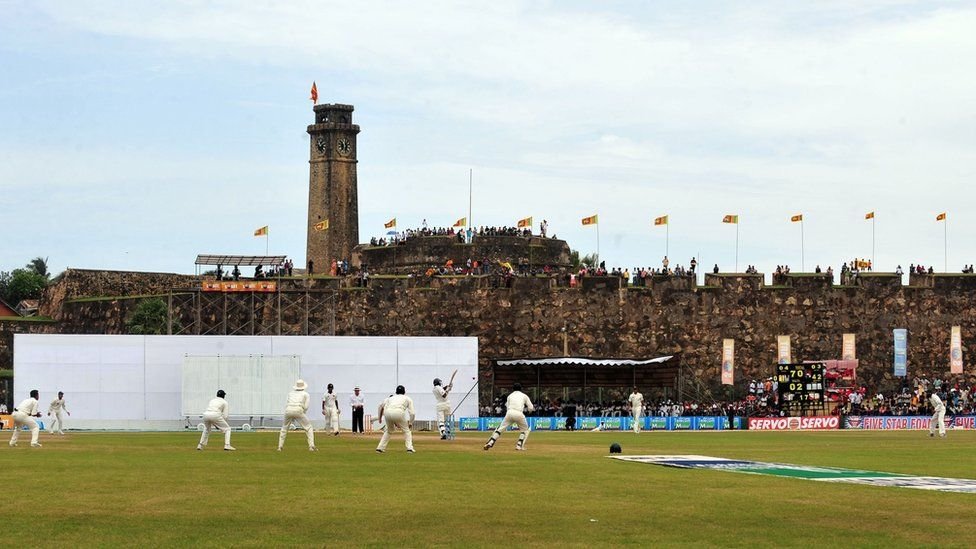
India lands in Sri Lanka this week for a two-Test series that starts August 15, and while the team news and squad debates will dominate the build-up, the more useful question is a quieter one: what will these two pitches actually do?
It's not a small question. In Sri Lanka, more than almost anywhere else in Test cricket, the ground picks the winner before a ball is bowled. Get the pitch wrong and you lose the toss, the plan, and often the match. Get it right and you've done half the work.
The Series at a Glance
The first Test starts August 15 at the Galle International Stadium, running through August 19. The series then moves to the Sinhalese Sports Club (SSC) in Colombo for the second and final Test, August 23 to 27. Both matches count towards the WTC 2025-27 cycle, so there's real weight behind every session, not just bragging rights. India have already been out in Colombo since August 7 for a four-day warm-up match, which tells you how seriously the tourists are taking the adjustment period. Sri Lankan conditions are not something you walk into cold.
Galle: The Pitch That Changes Its Mind
Galle is built on clay-based soil mixed with local minerals, and that composition is exactly why the pitch behaves so differently across five days. Day one and two play close to true: even bounce, honest pace, a surface that rewards batters who put the work in. From day three onward, that changes. The pitch dries, the cracks widen, and the ball starts gripping and turning sharply for the spinners.
The numbers tell the story better than any description. First-innings totals at Galle average around 375. By the second innings, that drops to 312. By the third, it's down to 239. Whoever bats last is batting on a completely different surface to whoever batted first, even though it's the same 22 yards.
That degradation is why winning the toss and batting first at Galle is such a genuine advantage, not just conventional wisdom repeated out of habit. Across 46 Tests played at the ground, teams batting first have won 25 times, teams batting second have won 15, and 6 have been drawn. It's also, fittingly, the ground where Muttiah Muralitharan played his final Test, taking eight wickets in the match to close out his career on exactly 800 Test scalps: the ultimate proof of what a fourth-innings Galle pitch can do to batters who don't have the technique or the patience for it.
SSC Colombo: The Lord's of Sri Lanka, With a Twist
The Sinhalese Sports Club carries the nickname "the Lord's of Sri Lanka," and for the first two days of a Test, it earns it. The surface is flat, true, and genuinely batting-friendly early on: good bounce, minimal lateral movement, the kind of pitch that lets a set batter cash in.
Then the tropical sun does what it always does in Colombo. By day four, the surface has dried out and roughened up enough that spin becomes the dominant threat. First-innings totals at the SSC average around 324. By the fourth innings, that figure falls to roughly 183. It's a smaller drop-off than Galle in percentage terms, but it's just as decisive, because it tends to happen exactly when a team is under the most pressure: batting last, chasing a target, with the pitch offering the least support it will all match.
Batting first has historically been the stronger position here too, with the team setting the total winning somewhere around 55 to 60 percent of the time. Between the two venues, the pattern is consistent even if the numbers differ: win the toss, bat first, and make the opposition do their chasing on the pitch's worst day, not its best.
What This Actually Means, Tactically
None of this is trivia. It changes real decisions.
A captain winning the toss at either ground has an easy call on paper: bat first. The harder call is team selection, days before the toss even happens. Both surfaces reward spin depth over raw pace, especially from day three onward, which is why Sri Lanka have built a Test-match identity around spin quality for decades, from Muralitharan through to Rangana Herath. Touring sides who arrive without a spinner capable of landing the ball on a length, over after over, in the fourth innings heat, tend to find out the hard way why these two grounds have such a reputation.
For batters, the lesson is different: the technique that scores runs on day one at Galle or the SSC is not the technique that survives day four. Front-foot certainty against a new, hard ball gives way to something slower and more defensive: soft hands, a willingness to leave the ball on length, and the patience to accept that boundaries will be rare once the pitch starts turning square. Batters who can't adjust that mindset mid-match are usually the ones back in the pavilion first.
The Weather Factor
One thing working in the tourists' favour: timing. Colombo's wettest stretches are typically May–June and October–November. August sits in a comparatively drier window, so while a tropical afternoon shower is never off the table, the series is scheduled to avoid the worst of the monsoon disruption that can turn a Sri Lankan Test into a stop-start affair.
Two grounds, two different personalities, and the same underlying lesson: in Sri Lanka, the pitch is a fifth-day opponent as much as the team on the other side. The sides that read it correctly, and adjust their technique and their bowling plans as the surface changes under them, are the ones who win these series. Everything else is just the warm-up act.
Want to test how well you'd read a turning pitch under pressure? Try the tactical scenarios at Field Marshal and see if you'd set the same field a fourth-innings Galle surface demands.