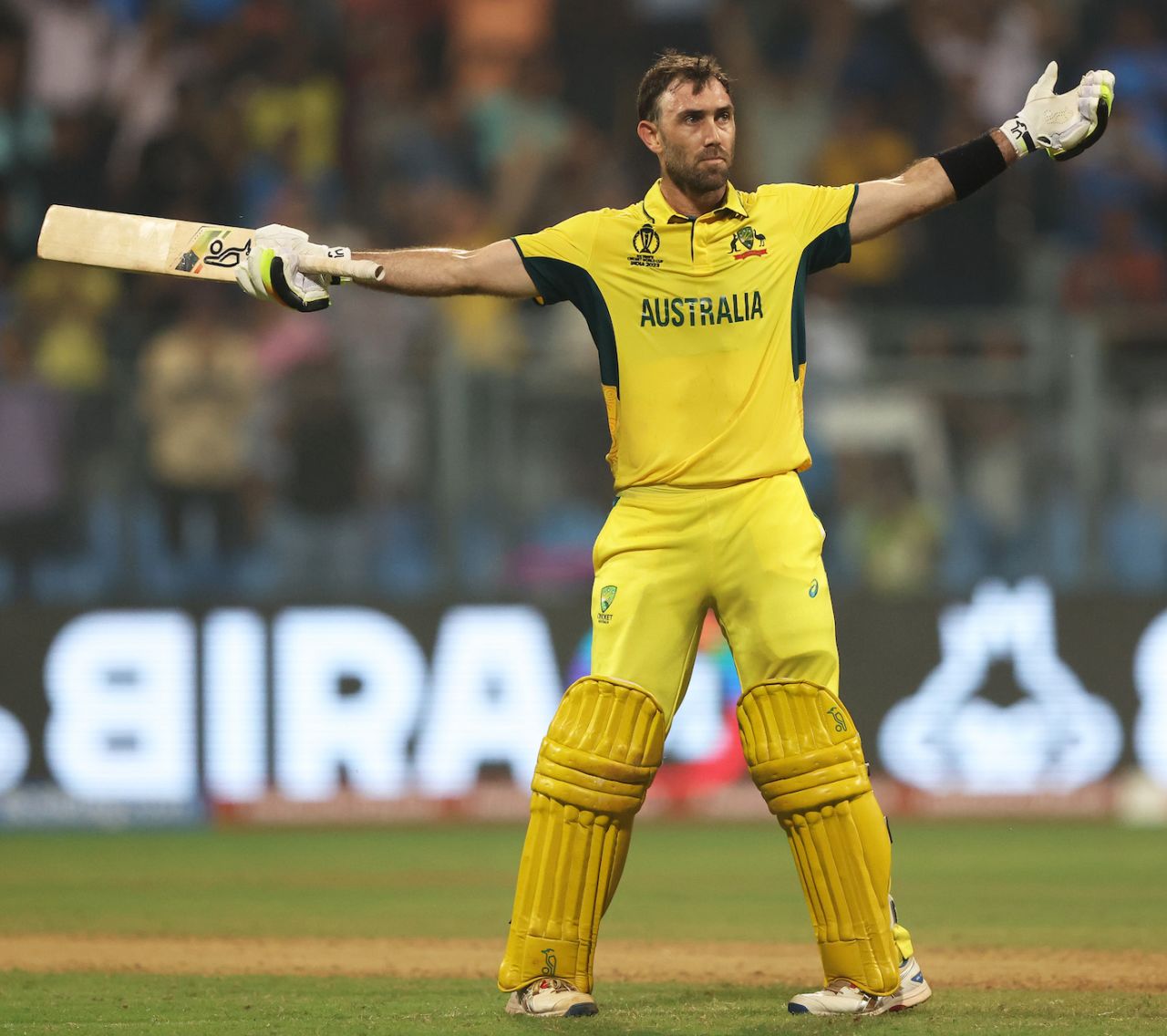
Numbers can explain what Glenn Maxwell did at the Wankhede Stadium on 7 November 2023. They cannot explain how. 201 not out from 128 balls. Australia 7 wickets down for 91, chasing 292. A World Cup game that had, by every logical measure, already been decided in Afghanistan's favour.
But numbers need context to mean anything. And the context here was unlike almost anything the sport has produced.
Australia's Path to That Night
The 2023 ICC Cricket World Cup was played across India, and Australia had entered it without the dominance that had defined their previous campaigns. They had lost their opening two games (to India and South Africa) and were facing the real possibility of an early exit. A loss against Afghanistan here would have made the semi-final route extremely difficult.
Afghanistan, meanwhile, had been the tournament's most impressive side in relative terms. Their spinners, Mujeeb Ur Rahman and Rashid Khan, had troubled teams throughout the competition. On a Mumbai surface that offered turn from early on, their 291 for 7 looked competitive, perhaps even match-winning.
The Collapse That Set the Scene
Australia's innings began poorly and deteriorated quickly. By the time their scorecard read 7 wickets down for 91 runs, the equation had gone beyond difficult. They needed 202 more runs with 3 wickets remaining. No team in ODI history had successfully chased a target from a similar position.
The crowd at the Wankhede, largely Indian and sporting a soft spot for Afghanistan's underdog story, sensed the upset. Commentary boxes were already composing the post-match narrative. Afghanistan's fielders were energised. The match, for all practical purposes, was over.
Maxwell vs His Own Body
Then Maxwell's body gave way.
Severe back spasms, combined with leg cramps that left him visibly struggling to run between wickets, made movement increasingly painful. Physios came onto the field. There were open discussions about whether he could continue. The broadcast showed him barely walking between deliveries.
Most batters in that state would retire hurt. Maxwell didn't. Instead, he recalibrated with remarkable clarity. If he could not run, he would hit boundaries. If he could not move forward to drive, he would stay back and sweep. If his legs refused to carry him between wickets, Pat Cummins, batting at the other end with extraordinary defensive grit, would manage the strike.
What followed was not slogging. It was calculated destruction. Maxwell identified the fielding restrictions. He picked his matchups against each bowler. He targeted the shorter boundary. He improvised from positions that would have been physically impossible for anyone not driven by pure refusal to accept the situation.
The Numbers, Placed in Context
201 not out from 128 balls. 21 fours and 10 sixes. A partnership of 202 unbroken runs with Cummins, who contributed 12 from 67 balls, an innings of pure defensive courage that frequently gets overlooked in the larger story.
Australia won by 3 wickets. It was only the third ODI double century in history at the time, and the first ever scored in a World Cup. Maxwell's strike rate across the innings was 157.03, achieved while physically unable to run properly between wickets.
What the Cramps Actually Meant
The physical element is worth dwelling on, because it changes the nature of what Maxwell achieved. A batter at full fitness who scores 200 in a World Cup is extraordinary. A batter who scores 200 while experiencing cramps severe enough that running became limping, while personally managing his body to stay at the crease long enough to complete the chase, is something else entirely.
It removed options. It meant boundaries or nothing. It meant he had to be right about which deliveries to attack, because misjudgements that a mobile batter could turn into scrambled singles were, for Maxwell that evening, potential wickets.
Under that constraint, he scored faster in the second half of his innings than the first.
Why It Belongs in a Different Category
There have been other extraordinary innings in World Cup cricket. There have been other fightbacks from impossible positions. What makes the Maxwell innings categorically different is the combination of variables working against him simultaneously: the score, the wickets remaining, the physical pain, the tournament pressure, the quality of Afghanistan's bowling, and the absence of any genuine batting partner.
Cricket at the highest level rewards talent. What it cannot plan for is the kind of refusal that Maxwell produced that night: the quiet, undramatic decision to simply not accept that the match was over.
For those who organise cricket at any level, the lesson is the same one every captain learns: a game is never finished until it is. If you want to build a cricket environment where that competitive spirit has a proper stage, Crickonnect's match booking platform gives you the structure to schedule and manage games with the seriousness they deserve.
Also read: India's 2011 World Cup Win: The Night Cricket United a Nation, another evening when the match was rewritten in its final chapter.
Think you know your cricket legends? Guess the Legend is a new cricketer every day — six clues, six guesses.