The match is over. Both teams have batted their full overs, and the scores are dead level. There's no extra time, no penalty shootout in the football sense. Cricket's answer is the Super Over, a single, brutal over that decides everything the previous three hours couldn't.
How a Super Over Works
Each team selects two batters and one bowler for their Super Over. The team that batted second in the main match bats first in the Super Over, a rule that exists specifically so the team batting second in the tiebreaker knows exactly what target they're chasing, just like the main match. Six balls are bowled. Whichever team scores more runs wins outright.
If a team loses both their nominated batters during their Super Over, their innings ends immediately even if balls remain. There's no walking in a fresh batter from the rest of the squad. The bowler is restricted to bowling from only one end, and a bowler who conceded a wide or no-ball is not otherwise restricted the way normal over-limits apply in the full match.
What Happens if the Super Over is Also Tied?
This is where it gets genuinely strange. If the Super Over itself ends level, different tournaments use different tiebreakers:
Boundary Count
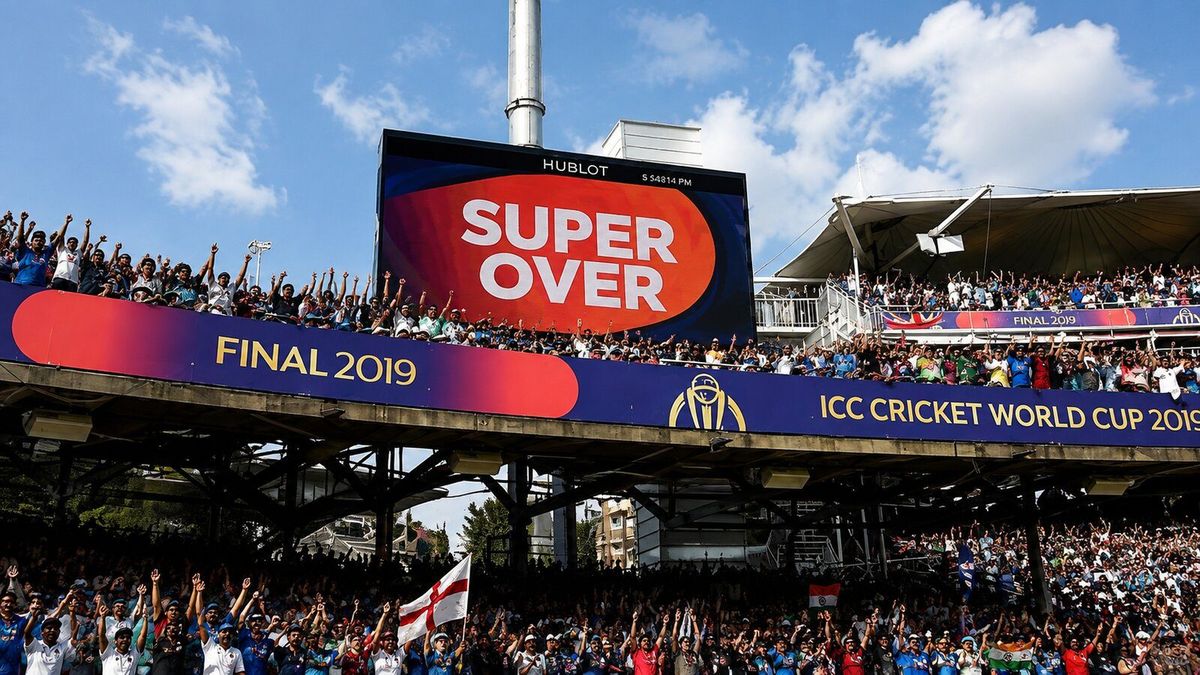
The most famous version, used at the 2019 World Cup final, counts the total number of boundaries (fours and sixes) each team hit across their entire innings, including the Super Over. England won the tournament having tied both the main match AND the Super Over against New Zealand, purely because they'd hit more boundaries across the whole game. New Zealand had matched them run for run and still lost. The rule was heavily criticised afterward for feeling arbitrary, and the ICC has since moved away from it for some formats.
Repeated Super Overs
Many T20 leagues, including franchise competitions, now simply play another Super Over if the first one ties, and keep playing them until someone wins. This can genuinely continue multiple times in a single night, with teams having to nominate fresh batters and bowlers each round if their originals aren't available.
Why Not Just Continue the Match?
Cricket doesn't have "extra overs" the way football has extra time, because a full extra period would exhaust bowlers who've already sent down their maximum quota and could take hours nobody has budgeted for in a broadcast or venue schedule. The Super Over compresses the tiebreaker into six balls: high stakes, minimal time, maximum drama. It's also why Super Overs consistently produce some of the most watched passages of cricket in the sport: the format itself is built for chaos.
Tactical Decisions Inside a Super Over
Captains treat Super Over selection like a specialist puzzle, not a normal batting order. The two batters chosen are typically the team's most explosive hitters, regardless of their normal batting position. A No.7 finisher might open the Super Over ahead of the team's regular Test-style opener. The bowler is almost always the team's best death-overs specialist, chosen specifically for control under pressure rather than raw pace. Field settings mirror a death-overs T20 field: boundary riders out, minimal gaps, everything set to prevent the one big shot that ends it in three balls instead of six.
Where You'll See a Super Over
Super Overs are used in T20 internationals, T20 leagues like the IPL and Big Bash, and some ODI formats including World Cup knockout matches. Test cricket, being a five-day format with the possibility of an outright draw, has no Super Over. A tied or drawn Test simply stands as a draw. That's just one of several ways formats differ. See the full breakdown of Test vs ODI vs T20.
Next time a match reaches a dead-level finish, you'll know exactly what's coming, and why the next six balls carry more weight than the previous overs combined.
Explore more of cricket's rules and terminology at Cricket Codex or The Rulebook.
Also read: The Night Maxwell Would Not Walk Off, a reminder that a match can look decided long before it actually is.