
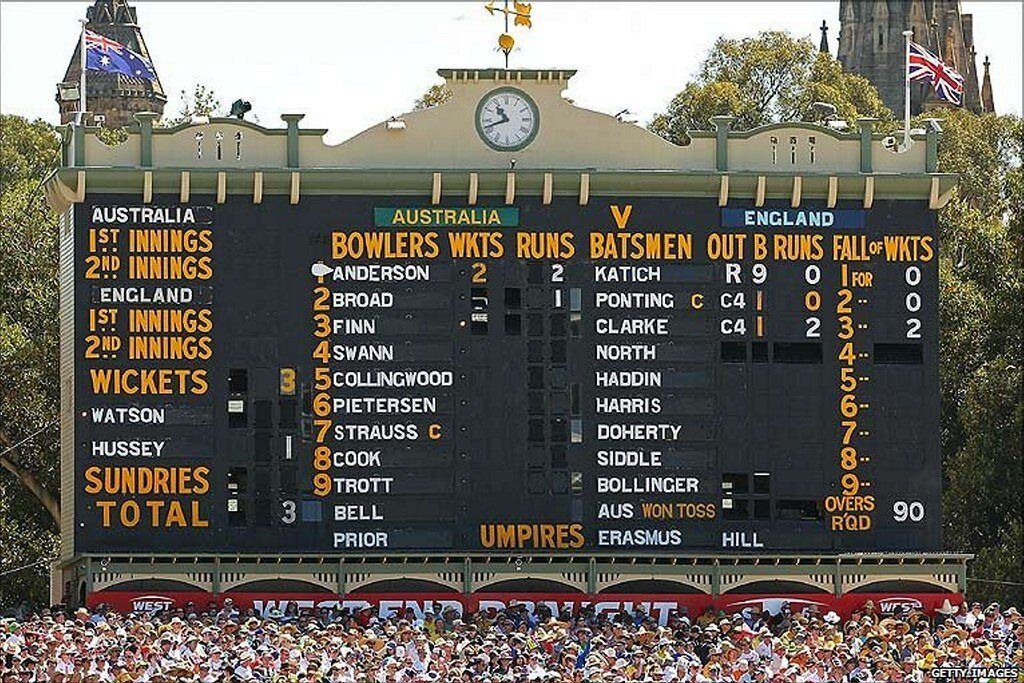
Final over of the final group game. The result is already decided, the match is dead, but the required run rate is being chased anyway, because a team needs to keep their Net Run Rate above a rival's to make the knockouts. To anyone unfamiliar with it, this looks bizarre. To anyone who understands NRR, it's one of the tensest parts of a tournament.
The Simple Definition
Net Run Rate is the difference between the average number of runs a team scores per over across a tournament, and the average number of runs they concede per over. The formula: NRR = (Total runs scored / Total overs faced) - (Total runs conceded / Total overs bowled).
A team scoring at 5.8 runs per over on average, while conceding at 5.2, has an NRR of +0.60. A team scoring at 5.5 while conceding 5.9 has an NRR of -0.40. When two or more teams finish a group stage with identical points, NRR is almost always the first tiebreaker used to separate them.
A Worked Example
Say a team bats first and scores 280 off their full 50 overs, then bowls the opposition out for 220 in 45 overs. Their runs-scored rate for that match: 280/50 = 5.60. Their runs-conceded rate: 220/45 = 4.89 (when a team is bowled out before facing all their overs, the FULL allotted overs are used in the calculation (not just the overs actually bowled), which matters enormously). Match NRR: 5.60 - 4.89 = +0.71 for that game. Across a tournament, these numbers accumulate from every match into one combined figure.
Why Getting Bowled Out Early Hurts NRR Badly
This is the single most misunderstood part of NRR, and it's also the most tactically important. If a team is bowled out in 30 overs while chasing a target, their runs-scored calculation still uses the FULL 50 overs they were allotted, not the 30 they actually faced. Getting bowled out cheaply doesn't just cost the match, it quietly destroys a team's run rate for every remaining game in the tournament. This is exactly why struggling lower-order batters are sometimes told to simply survive and accumulate ones and twos rather than swing for the fences once a chase is already lost. Preserving overs faced protects NRR even when the win is gone.
Why Batting First Can Be a Strategic NRR Choice
Toward the end of a group stage, with the calculators out, captains sometimes make decisions purely around NRR rather than just winning the match in front of them. A team already qualified might bat first and declare-style accelerate to boost their run rate, since there's no benefit to margin in isolation, only cumulative rate matters. A team fighting for a net run rate edge might choose to bowl first specifically to control how many overs the opposition faces, denying them the chance to inflate their scoring rate in the last 10 overs.
The Points Table Drama
NRR becomes headline news whenever three or four teams are separated by identical points with one qualification spot open. Fans start doing live math mid-match: "if Team X wins by more than 45 runs batting first, they qualify over Team Y regardless of Team Y's result." Broadcasters run real-time NRR permutations on screen. It's added a second layer of tension to matches that would otherwise be dead rubbers: the actual result stopped mattering an hour ago, but the margin still does.
NRR vs Head-to-Head vs Other Tiebreakers
Tournament regulations vary: some competitions use head-to-head record as the first tiebreaker before NRR, others go straight to NRR. Always check the specific tournament rules, since the IPL, ICC events, and domestic leagues don't all apply tiebreakers in the same order. But once points and head-to-head are exhausted, NRR is almost universally the deciding number. Worth noting the difference in scope: NRR settles ties across an entire group stage, while a single tied match gets resolved on the day by a Super Over instead.
Once you understand that NRR rewards big wins and heavily punishes collapses, not just results, every “dead” group game starts to matter again.
For more cricket terms and rules explained without the jargon, browse Cricket Codex or head to Matches to see how Crickonnect keeps your own team's scoring history organised.