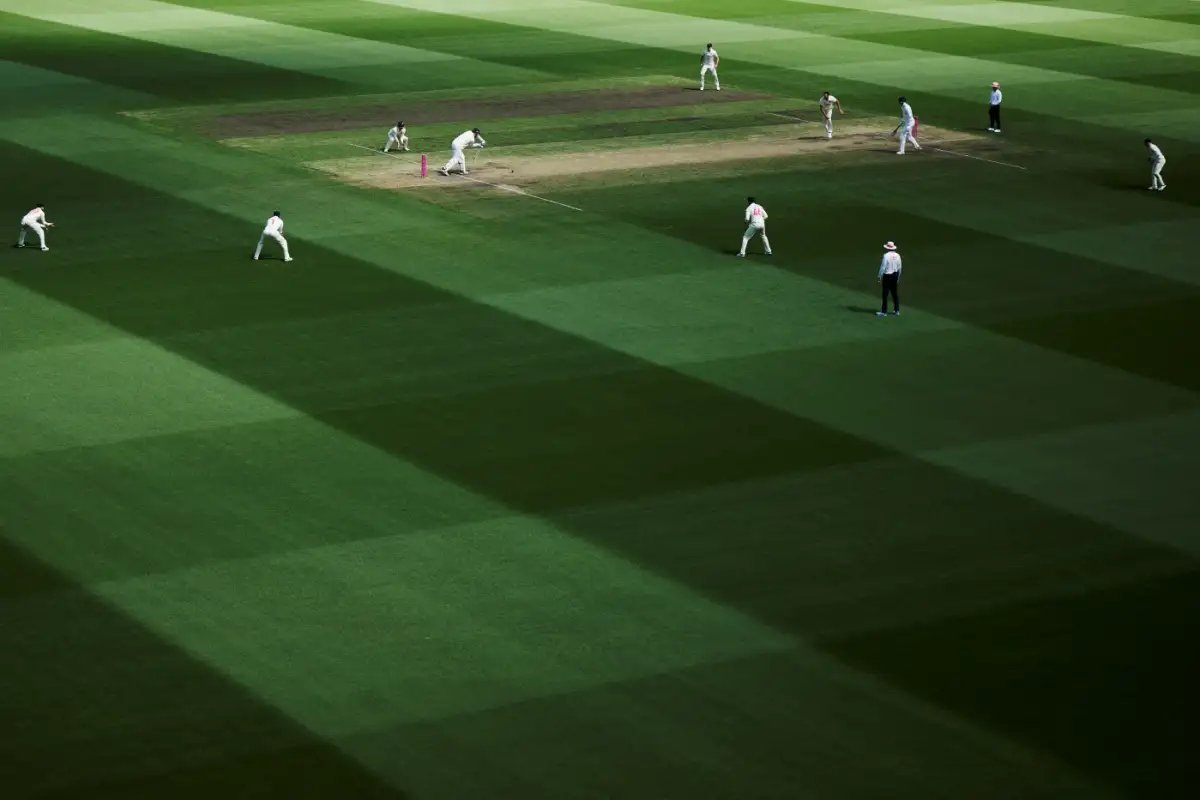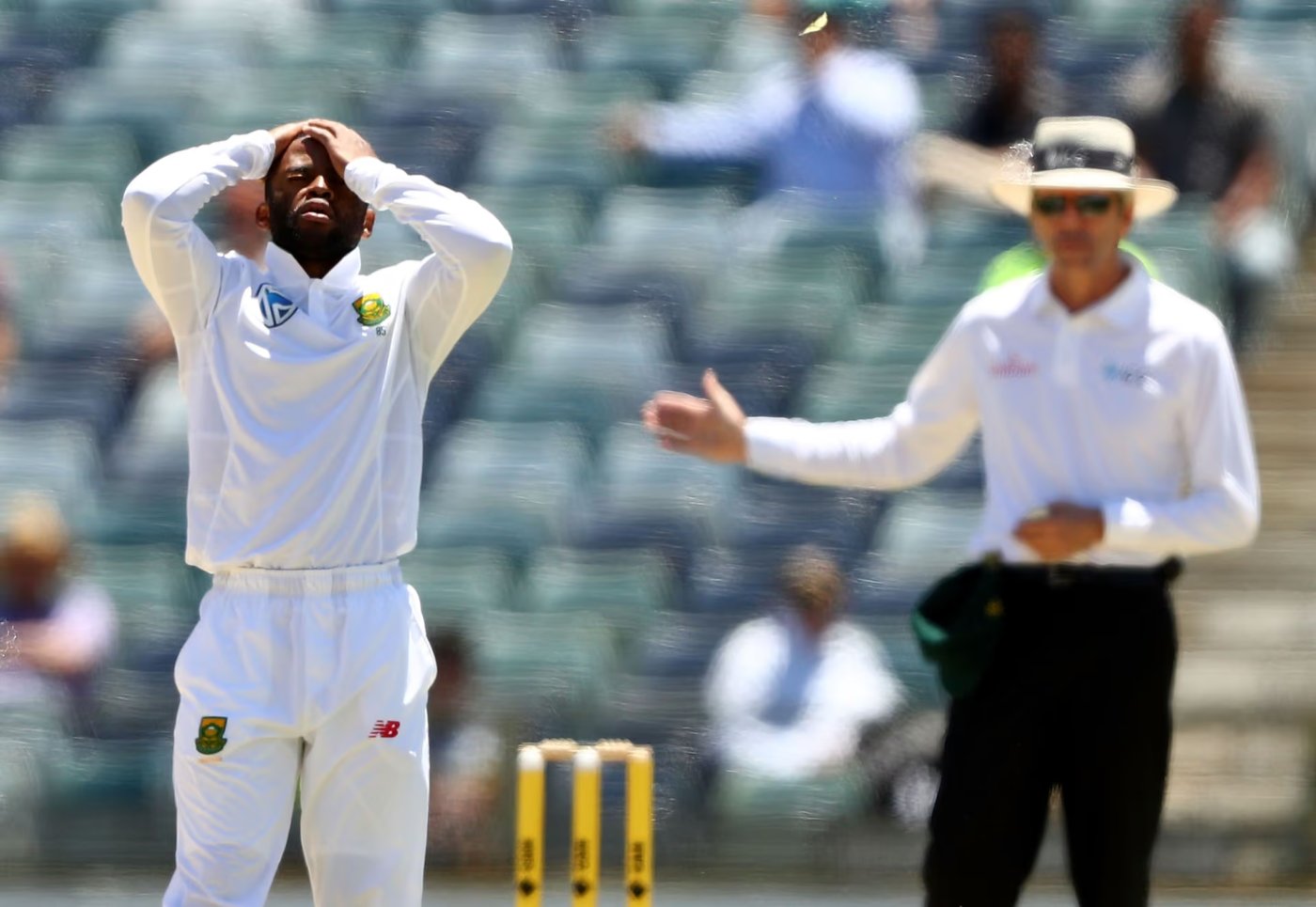
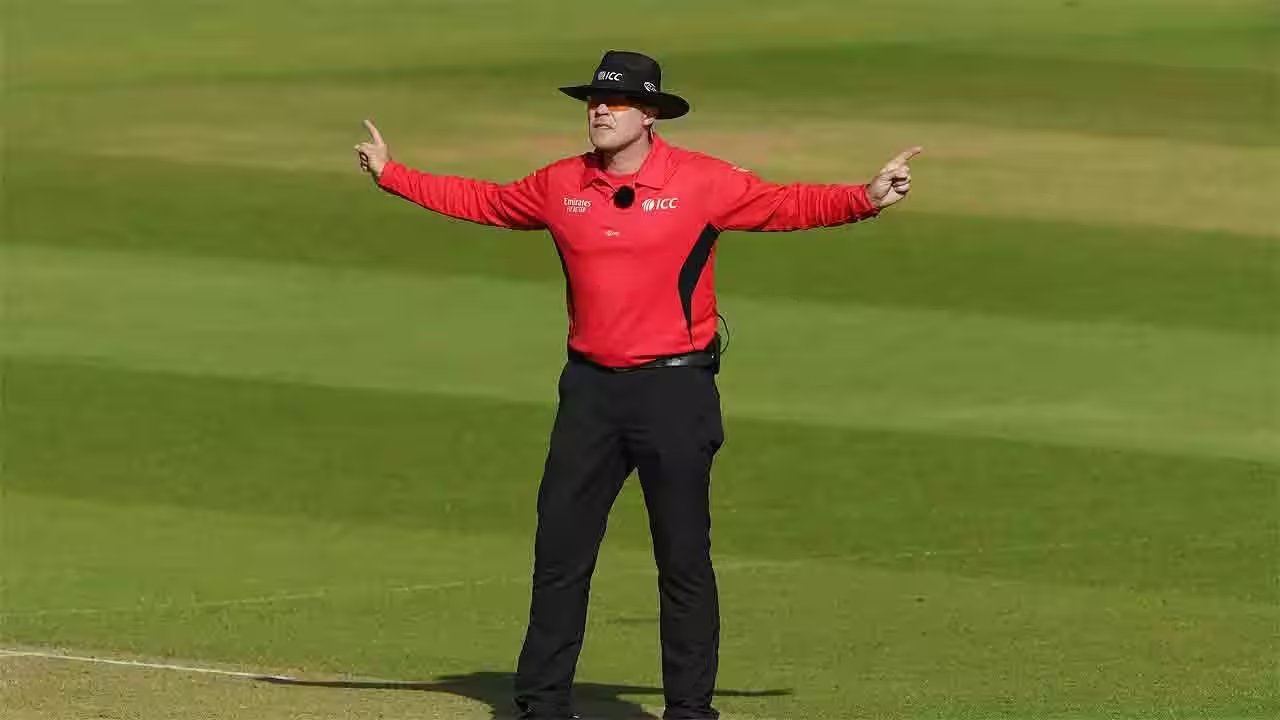
A wide is a delivery judged too far from the batter for them to reasonably hit. The batting side gets one run, the delivery doesn't count, and the bowler has to bowl it again. The umpire signals it by extending both arms horizontally.
The Short Answer
A ball is wide if it passes beyond the batter's reach, judged from where the batter was standing in their guard when the bowler was running in. It applies to balls passing wide on the off side or the leg side, and to balls bouncing over the batter's head and out of reach.
How Umpires Judge a Wide
Umpires judge reachability, not a fixed line. In white-ball cricket, guide lines are marked on the pitch to help. Since 2022, the Laws judge the delivery from where the batter is standing as the ball reaches them, not only from their original guard, so a batter who moves across the stumps can no longer make a ball wide, or save it from being wide, by shuffling.
The Penalty
One run is added to the batting side's total, charged to the bowler, and the delivery must be bowled again. If the batters run or the ball goes for four, those runs are added on top.
Can a Batter Be Out Off a Wide?
Yes, but only in limited ways: stumped, run out or hit wicket, and a few rare modes like obstructing the field. A batter cannot be bowled, caught or LBW off a wide.
Wide vs No-Ball
Both are extras that cost the bowler a run and an extra delivery, but they differ in why they're called and what follows. A no-ball is about the bowler's action or a rule breach (overstepping, height, too many bouncers), so the batter can score off the bat freely. In white-ball cricket a front-foot no-ball is followed by a free hit, but a wide isn't. See the full breakdown in What Is a No-Ball in Cricket?
Why It Matters
Wides are the quiet match-losers: a few in a death-over can turn a close chase. They also don't count as a legal ball, so an over containing a wide can't be a maiden. Track how many a bowler gives in the conceded figures, and look up more terms in the Cricket Codex.